
Michaela Melo forgot to buy an oven mitt. Shortly before she graduated from the University of the Philippines, Melo moved into her first apartment and made the oven mitt discovery. “I vividly remember cooking a pizza in my new apartment’s oven and realizing I didn’t have anything to take it out with. I had to use a washcloth!”
Now a seasoned pro, Melo’s story offers helpful moving tips to anyone moving into a new apartment. She says a move-in checklist and apartment checklist make moving into your first apartment easier. “Being prepared with a list of these small necessities can make the transition much smoother and avoid such surprises along the way,” she said.
Budgeting and Financial Considerations
Setting a realistic budget using a budgeting app is one of the first things to tackle when preparing for your first move. Expenses pile up quickly, and you want to be prepared. Joshua Haley, Founder of Moving Astute, reminds clients that there are many other costs to consider besides rent.
“When moving into your first apartment, it’s crucial to consider the total cost beyond just the rent,” he said. “Many people underestimate or forget about additional expenses such as security deposits (which may require a credit score check and background check), utility setup fees, renters insurance, moving costs (including moving boxes, moving truck rental, or moving company fees), and initial furnishing and decorating expenses. Your credit score from credit bureaus will impact your ability to rent.”
You also want to consider purchasing renter’s insurance so that you are covered in case of unforeseen circumstances.
Finding the Right Apartment
Before you start searching on rental platforms like Zillow, think about your priorities when it comes to the apartment you want. Is there a particular neighborhood that you want to live in? Check local crime statistics for safety, research public transportation access, and confirm parking spot availability. If so, are you willing to sacrifice when it comes to the number of bedrooms? Will you be able to physically tour the apartment, or do you need to proceed site unseen? There is almost always a give-and-take when it comes to making your final decision, and it helps to be clear on non-negotiables before the search begins!
Once you start saving listings that look promising on sites like Facebook Marketplace or rental platforms, feel free to reach out to real estate agents or the property manager at the leasing office directly. Oftentimes, their numbers are listed, and this can help move the process forward more quickly. Ask when you can come by to see the apartment, and make sure to have your list of questions at hand so you don’t forget. For example, you may want to inquire about whether the unit has laundry hookups, amenities like a gym, parking space options, or storage units available for seasonal items.
Pro Tip
Beware of scams and fake rentals that can be found online. Check out our guide on how to find an apartment on Craigslist for tips on how to avoid rental scams.
Lease Agreement and Legal Considerations
Even though it’s your first apartment, be aware that negotiating lease terms with the leasing office or property management company is common practice. Make sure you understand community rules and parking space policies. Read and understand all the clauses and terms of the agreement before signing, including the condition sheet documenting the apartment’s current state, and don’t hesitate to ask questions if something is unclear. If you need further clarification, it may be helpful to speak with a lawyer.
Melo says navigating the process of moving into her first apartment was challenging. “Moving into my first apartment was both exciting and a bit tough. I had to search for a suitable place, sign the lease, and set up everything on a budget. It was different from moving into a dorm because I had more freedom to choose and make the place my own.”
Furnishing and Essential Items
Once you’ve found the right apartment and signed the lease at the leasing office, it’s time to move on to the fun stuff! Purchasing the essential items you’ll need in your new place can be done on a budget if you get creative.
“To save money, I discovered the dollar store, which was a real game-changer,” said Melo. “I could get cheap kitchen tools, pots and pans, spices, and household stuff to make my new place cozy without spending too much. It was a smart way to start my own little home.”
Checking out thrift stores, thrift shops, second-hand items at Goodwill, garage sales, and Facebook Marketplace can also save money on furniture like coffee tables, a TV stand, and dining room sets. This move-in checklist and apartment checklist will give you a great place to start when thinking about everything you need to have in your first apartment—from bedroom essentials like pillows to living room furniture, dining room tables, toilet paper, a First aid kit, and plungers!
Melo says don’t forget the small stuff. “One helpful moving tip from my move-in checklist I discovered when moving into my first apartment is to make a list of small but essential items that are often overlooked. Include things like a plunger, Toilet paper, extra light bulbs, a broom, a tool kit, oven mitts, baking trays, pots and pans, kitchen tools, storage bins for clothes storage, and seasonal items. If there’s one thing that will help keep your stress levels low as you transition to your first apartment, it’s giving yourself plenty of time to tackle things gradually. Use these moving tips to stay organized.”
Packing and Moving Preparation

If there’s one thing that will help keep your stress levels low as you transition to your first apartment, it’s giving yourself plenty of time to tackle things gradually. Creating a move-in checklist, apartment checklist, and timeline is a helpful way to start, including booking your moving date and reserving a moving truck or moving company. That way, you know what needs to get done each week, and you’ll be ready to go by moving day! Things like decluttering, gathering moving boxes and packing supplies, or renting a storage unit for seasonal items can be done well in advance of the move to reduce moving costs and will take the pressure off as the date approaches.
During this period, you’ll need to decide whether it makes sense to hire a professional moving company or rent a moving truck for a DIY move to reduce moving costs.
“When I moved into my first apartment, I opted to do it myself to save money,” said Melo. “It turned out to be quite a task, taking a lot of effort and time. Looking back, I would recommend considering professional movers if you can afford it. They handle the heavy lifting, moving boxes, and logistics, which relieves a huge burden—though it increases moving costs compared to a DIY moving truck rental.”
Utilities and Service Set-Up
Some of the key housekeeping tasks that go along with a move include scheduling utility hook-ups and transfers. Contact the leasing office or property manager for provider information. The owner, property manager, or leasing office should provide you with a list of all utilities and contact information, including details about the HVAC system, fire alarm, and security system. You may need to do your own research for internet, cable, and phone providers, although some apartment complexes come with standard packages. Don’t forget to forward your mail to your new address, which can typically be done online at usps.com.
Melo said she faced some unexpected challenges on the administrative side. “I didn’t anticipate the level of responsibility that comes with it. Handling bills and household chores was a new experience for me. The initial costs of setting up the place, like buying kitchen utensils and cleaning supplies, also caught me off guard. It was a learning process that made me understand the importance of being organized and prepared for adult responsibilities.”
Safety and Security Measures
When you move into your new apartment, take some time to familiarize yourself with the safety and security situation. Check local crime statistics for your neighborhood and review the building’s security system. This might include things like:
- Checking and testing smoke alarms, fire alarms, and carbon monoxide detectors
- Assessing door and window locks
- Familiarizing yourself with emergency exits
- Understanding building security system protocols and community rules
Moving Day and Settling In
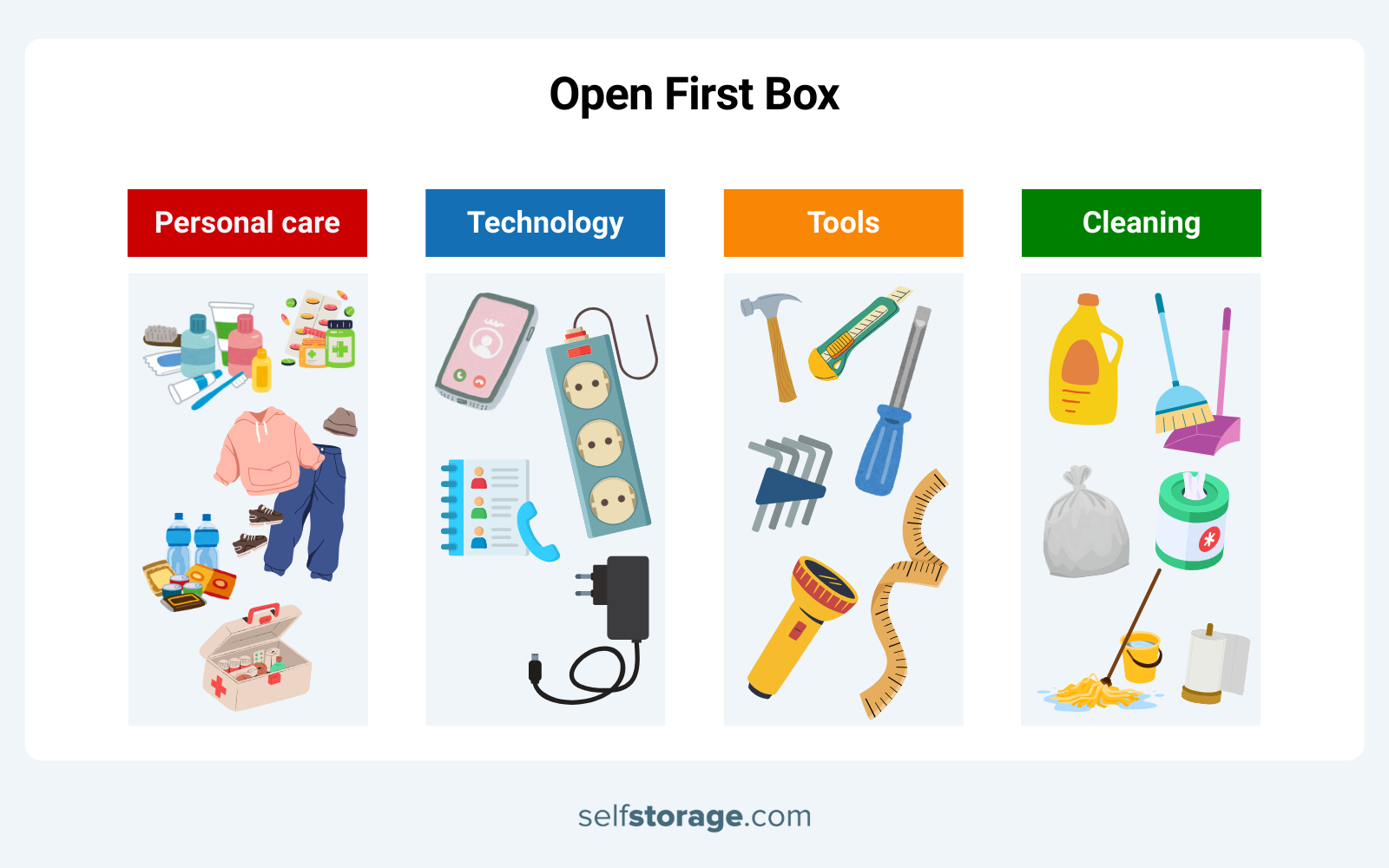
As you’re packing up your current home, make an essentials moving box of things you will need access to on moving day, and keep it with you. You don’t want to be digging through boxes for your toiletries, medications, or coffee!
Whether you are packing moving boxes yourself or getting help from a moving company, remember to write the name of the room the items will end up in on the box—bedroom essentials, living room furniture, dining room items, or kitchen tools. For example, if you currently have books in your bedroom but will store them in your living room at the new pad, write ‘living room’ not ‘bedroom’ on that box. Consider renting a storage unit for items that won’t fit.
Take your time purchasing all the odds and ends you’ll need in your new home—coffee tables, TV stands, pots and pans, storage bins for clothes storage, and other items from thrift stores, garage sales, or Facebook Marketplace. Melo said “I made the mistake of going on a shopping spree and buying everything at once, which led to unnecessary stuff piling up.” She says anything that can wait should be purchased after the move.
“In the future, I’d do things differently by taking it easy and making lists of what I really need as I go along. I’d prioritize getting essentials like a plunger and a basic tool kit in advance. Everything else can wait until I genuinely require it. Being more mindful of my spending, tracking expenses in a budgeting app, buying second-hand items from thrift shops, and focusing on practical necessities would help me avoid clutter and save moving costs.”
Building Relationships with Neighbors and Building Management
When you arrive at your new home, make sure to do a move-in inspection using the condition sheet and report any damages to the apartment to your property manager at the leasing office (like imperfections in the drywall or broken fixtures). Find out the protocol to report when maintenance is required.
And don’t forget to introduce yourself to the neighbors—maybe even throw a housewarming party once you’re settled!
Establishing a Routine and Making the Space Your Own
“When people move into their first apartment, they often underestimate the importance of bedroom essentials like a comfortable bed for a good night’s sleep,” said Melo. “It’s crucial! Instead of rushing to buy everything, like a TV stand and TV or a fancy living room couch and coffee table for your dining room, focus on the essentials to save money. Shop thrift stores and garage sales for budget-friendly second-hand items.”
Personalizing your apartment means taking stock of the things that are most important to you and prioritizing around that—whether it’s bedroom essentials, a cozy living room setup, or functional kitchen tools and pots and pans. Use storage bins for clothes storage and keep seasonal items in a storage unit if needed. For Melo, it’s her bed. For you, it might be a super comfy couch. Once the stress of the move is over, it’s time to relax into a daily routine, build community with your new neighbors, and explore the area.
We hope Melo’s story and these tips for moving into an apartment inspire you to stay organized, take time to settle in safely, and above all enjoy the experience!
A few final moving tips
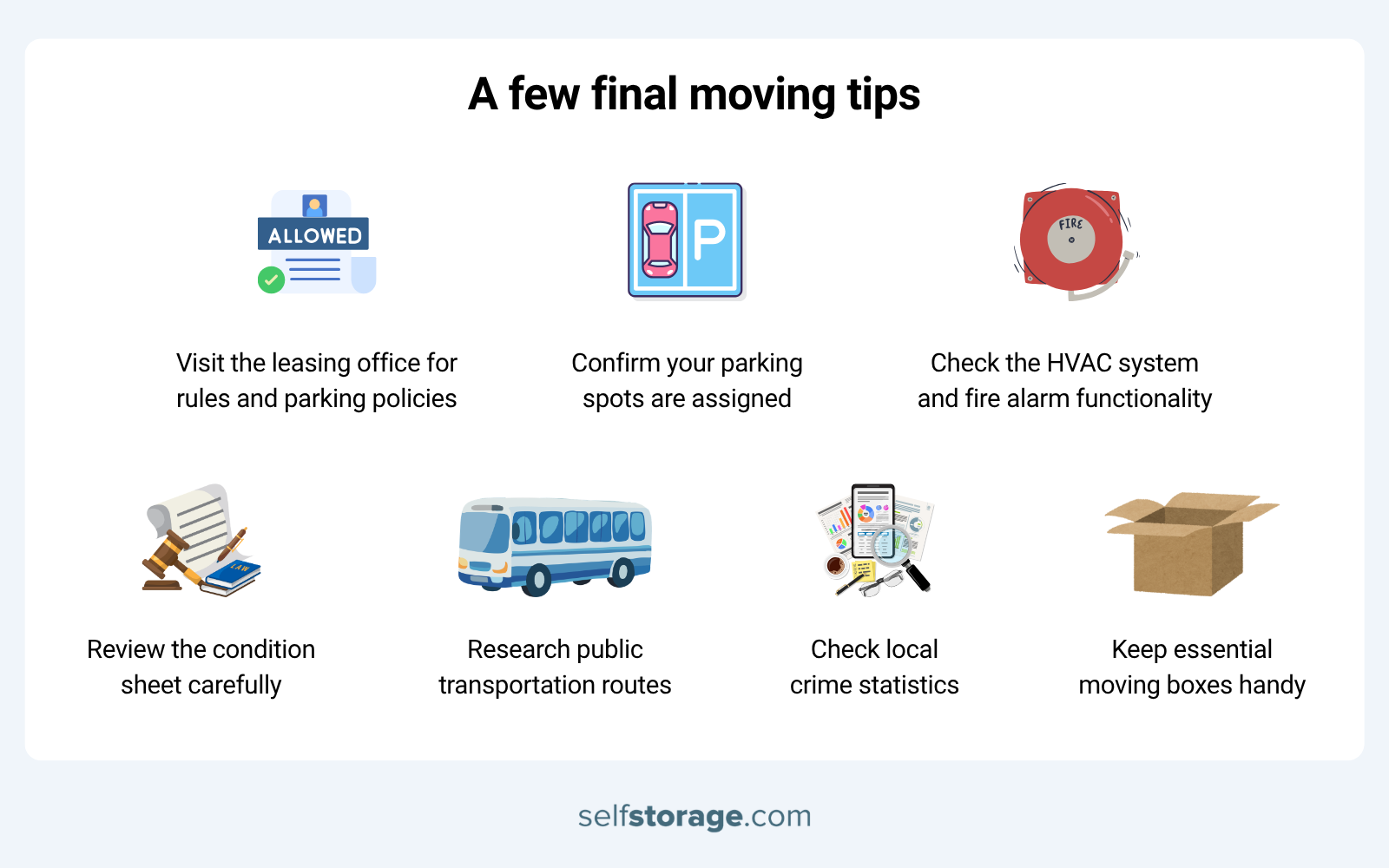
- Visit the leasing office to understand community rules and parking space policies
- Confirm your parking spots are assigned
- Check the HVAC system and fire alarm functionality during your move-in inspection
- Review the condition sheet carefully with your property manager or property management company
- Research public transportation routes
- Check local crime statistics for peace of mind
- Keep essential moving boxes handy for seasonal items you’ll rotate throughout the year
Whether you’re furnishing from Facebook Marketplace, thrift stores, thrift shops, or garage sales, remember that creating your first home is a process—use a budgeting app to track expenses, maintain good relationships with your leasing office, and don’t forget that housewarming party to celebrate!