
Article takeaways
- Colorado Springs has a population of nearly 500,000 and is Colorado’s second-largest city, with steady growth projected to continue through the decade.
- The cost of living runs about 1% above the national average, but remains significantly more affordable than Denver or Boulder.
- The local economy is anchored by defense, aerospace, healthcare, and a fast-growing tech sector — providing broad job opportunities for newcomers.
- Families will find strong public school options, particularly in Academy District 20, which ranks 13th out of 115 districts statewide.
- Outdoor recreation, mild (but variable) mountain weather, and a surprisingly rich arts and dining scene make the city easy to love once you arrive.
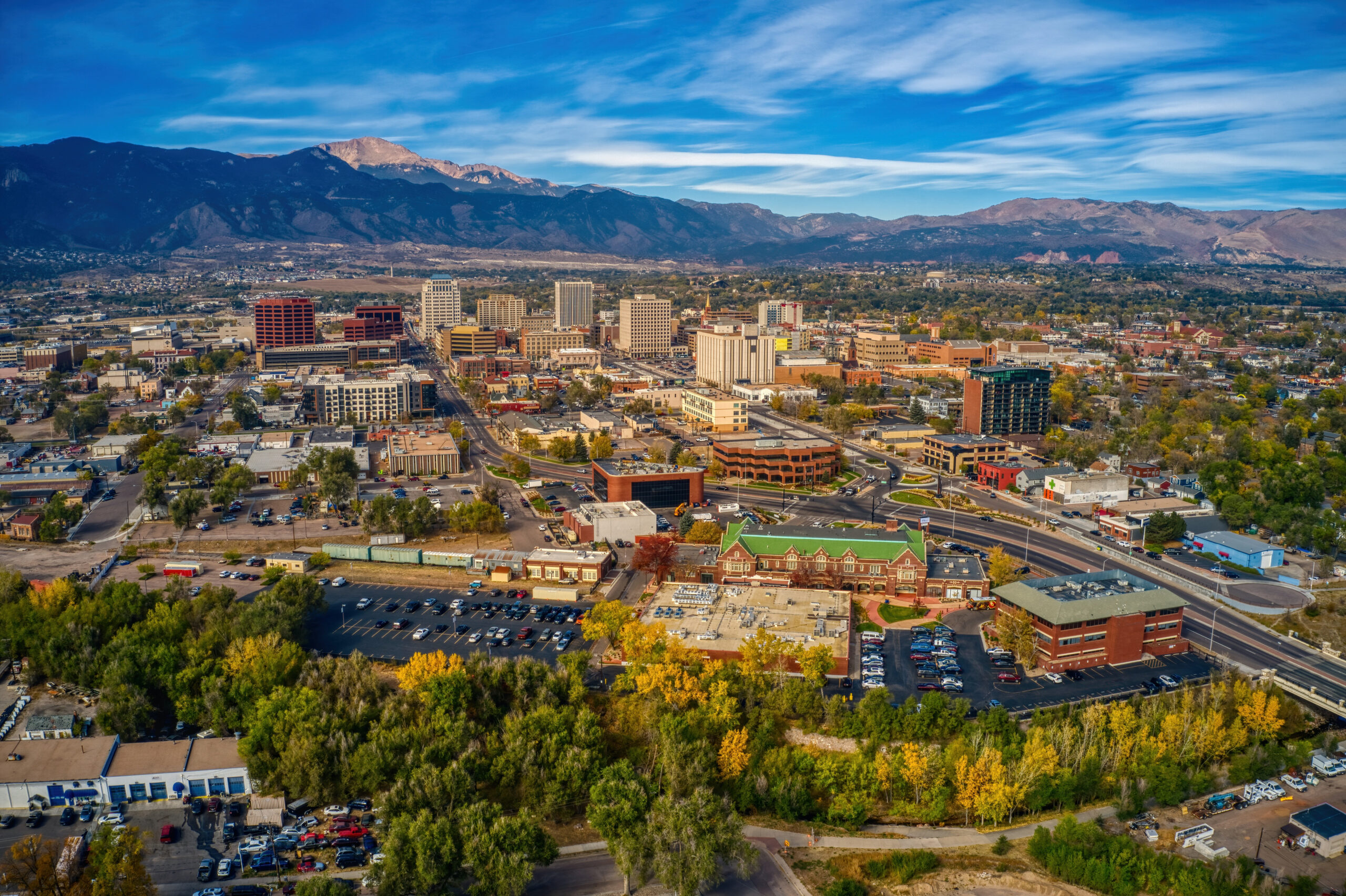
Moving to Colorado Springs means landing in one of Colorado‘s most livable cities — a place where red rock formations and Rocky Mountains views share space with a booming job market and neighborhoods built for real life. Whether you’re relocating for work, family, or a change of scenery, this 2026 guide covers everything you need to know about moving here and getting settled.
Colorado Springs At-a-Glance
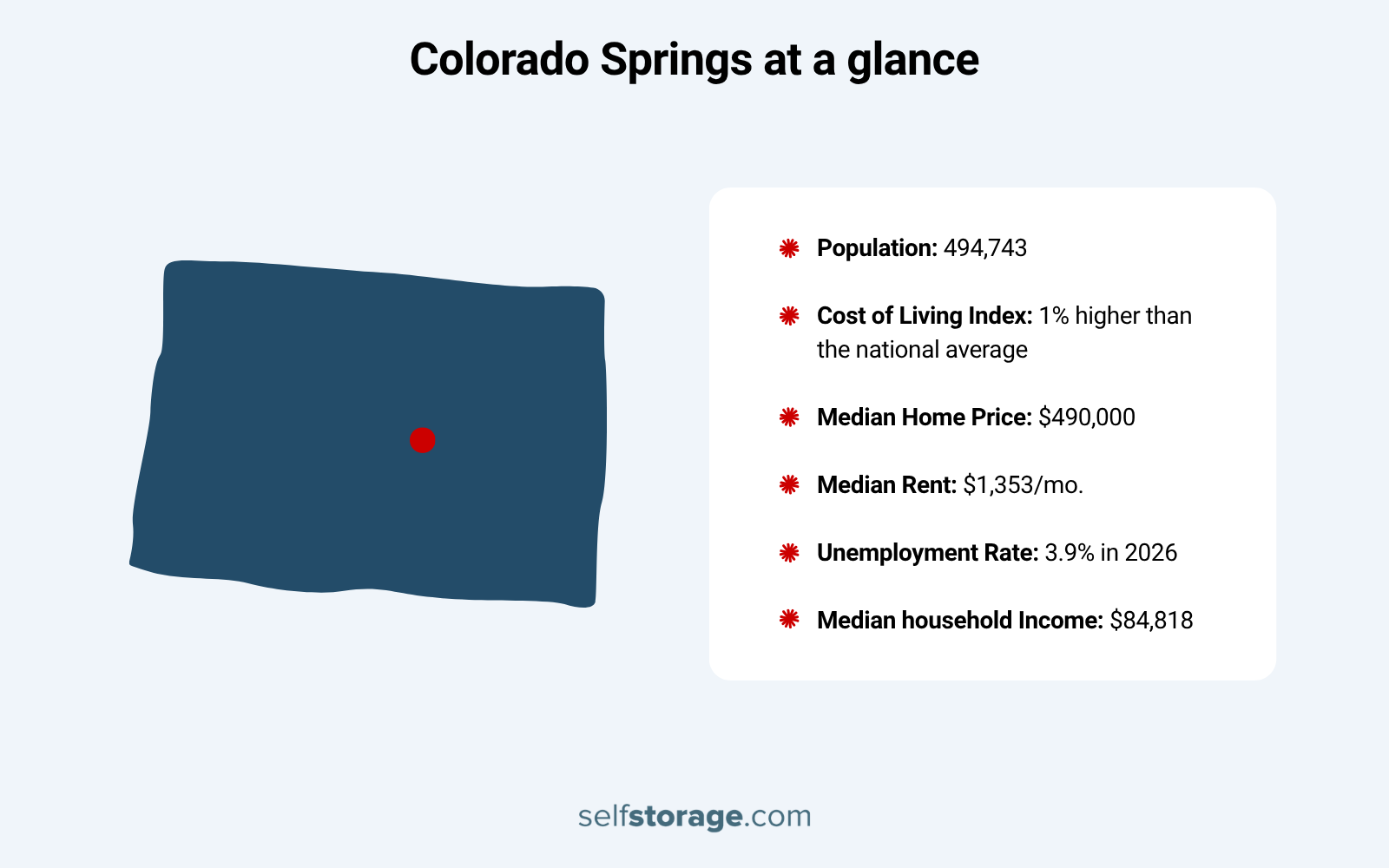
| City population (2026 est.) | 494,743 |
| Median household income | $84,818 |
| Median home price | $490,000 |
| Average rent (1BR) | $1,353/mo |
| Cost of living vs. national avg. | 1% higher than the national average |
| Unemployment rate (state, 2026) | 3.9% |
Cost of Living in Colorado Springs
Colorado Springs is meaningfully more affordable than most major Western cities, even if it’s not cheap by national standards. According to RentCafe’s March 2026 data, the average monthly rent in Colorado Springs is about $1,517, and the median household income is $83,198 — a reasonable balance for most budgets.
On the ownership side, Colorado Springs real estate has appreciated sharply. The typical Colorado Springs home averaged around $445,000 in late 2025, climbing to approximately $490,000 by January 2026.
Renters have a bit more breathing room. RentCafe’s June 2026 analysis puts the average one-bedroom apartment at $1,353 per month, with the overall average across unit types at $1,519 — down slightly from the previous year. Studio apartments start around $989/month for those traveling light.
For everyday expenses, a single adult needs between $50,000–$55,000 annually to live comfortably in Colorado Springs — and the city’s median salary of roughly $58,915 clears that bar. Budget-conscious neighborhoods like Spring Creek, Park Hills, and Westside offer apartments below the city’s median rent if affordable housing is a priority.
Affordable housing remains a challenge for first-time buyers, as home values have more than doubled since 2012. But compared to Denver, Boulder, and most coastal metros, Colorado Springs real estate still represents relative value. If you’re weighing real estate options across the Pikes Peak region, the city proper offers more inventory and price variety than surrounding communities like Manitou Springs or Monument. Colorado also has no inheritance tax and relatively moderate state income tax rates — worth factoring into your long-term planning.
Jobs & Economy
Colorado Springs has built one of the most diverse economies along Colorado’s Front Range, and it’s still growing. The city’s job market is anchored by four major sectors: defense and aerospace, healthcare, technology, and tourism.
- Defense and aerospace remain the foundation. The area is home to the United States Air Force Academy, Peterson Space Force Base, Fort Carson, Schriever Space Force Base, and NORAD — making it one of the country’s most significant military hubs. Private contractors follow: Lockheed Martin, Northrop Grumman, and L3Harris all maintain strong local operations.
- Tech is accelerating. According to Colorado Springs’ labor market outlook for 2025–2026, the city has seen a 12% increase in tech workers over the past five years. Hewlett Packard Enterprise and Oracle have expanded here, and the city is recognized as a top emerging market for tech talent in North America. Software developers are averaging around $126,000 annually, and 3,800 new defense and tech jobs are expected in the pipeline.
- Healthcare continues to grow steadily alongside the city’s population. UCHealth and Penrose-St. Francis Health Services are among the largest healthcare employers, with ongoing demand for nurses, physician assistants, and administrative professionals.
Colorado’s unemployment rate held at approximately 3.9% in April 2026, per the Colorado Department of Labor and Employment, with Colorado Springs seeing net job gains over that same period. Growth is more moderate than the peak boom years of 2017–2022, but the city remains a net positive for job seekers in defense, healthcare, and tech.
Neighborhoods in Colorado Springs
Colorado Springs covers a lot of ground and its neighborhoods each have a distinct feel. Here are five worth knowing before you start your search.
Downtown Colorado Springs is the most walkable part of the city. It’s compact, lined with local restaurants, coffee shops, live music venues, and a mix of Victorian architecture alongside newer development. It’s the best fit for young professionals and anyone who wants to commute on foot or by bike.
Briargate sits in the northern part of the city and is one of the most family-friendly areas in the Springs. It has well-maintained green spaces, a summer farmers’ market, and access to some of the best schools in El Paso County through Academy District 20. Shopping is abundant, and the neighborhood has a clean, suburban feel without being isolated.
Northgate is popular with military families due to its proximity to the U.S. Air Force Academy. It’s a natural landing spot for military moves — the neighborhood is well-connected, quiet, and close enough to the base to make the transition practical. Restaurants and breweries are nearby, and I-25 gives easy access to the rest of the city.
Broadmoor is Colorado Springs’ most established upscale neighborhood, situated near the world-famous Broadmoor resort at the base of Cheyenne Mountain in the Rocky Mountains foothills. It offers historic homes, significant green space, and a high safety rating. Best for buyers looking for character and walkable luxury.
Old Colorado City is the city’s original downtown — a historic commercial district turned neighborhood with an eclectic mix of galleries, boutiques, breweries, and restaurants. It attracts creatives, artists, and anyone who prefers character over polish. Local business owners and independent shops give it a distinct identity compared to the chain-heavy corridors further north.
Other established neighborhoods worth exploring include University Park, Patty Jewett, Old North End, Rockrimmon, and Springs Ranch. For buyers open to a rural feel with more land, the Black Forest area northeast of the city offers wooded lots and larger properties while still sitting within El Paso County.
Weather and Climate
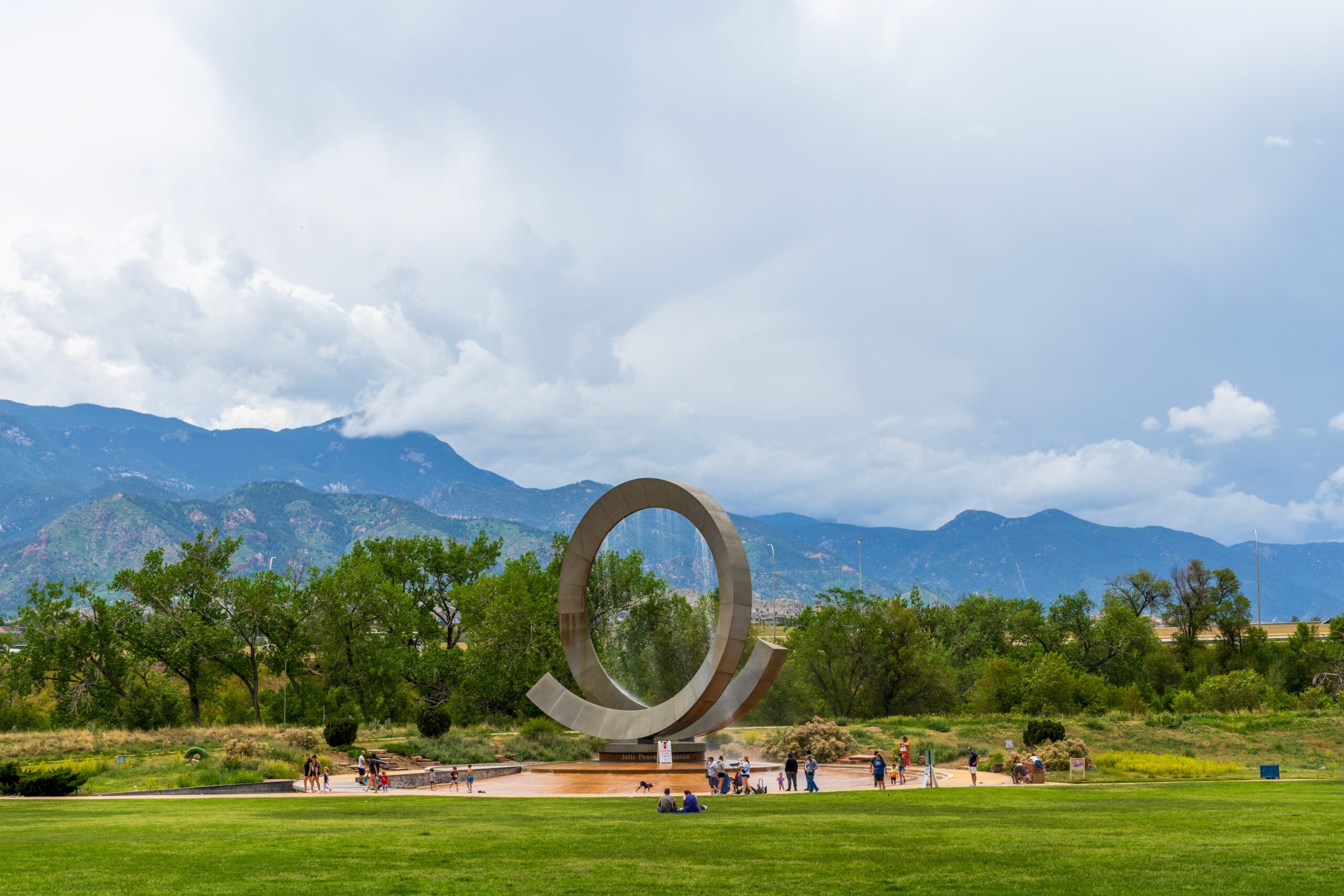
Colorado Springs sits at over 6,000 feet above sea level, and that elevation shapes everything about the weather. The short version: it’s sunnier and drier than most places you’ve probably lived, the winters bring real snow, and the weather can change fast.
According to WeatherSpark’s long-term averages, temperatures in Colorado Springs range from about 20°F at the winter low to 84°F at the summer peak. July is the hottest month, with highs averaging around 83°F — warm but rarely oppressive. December and January are the coldest, with lows dropping to around 16–18°F.
Snow is real, especially from October through April. Colorado Springs recorded nearly 60 inches of snowfall in 2024, though the city’s sun exposure means accumulation often clears quickly. New residents are sometimes caught off guard by spring snowstorms — late-season blizzard conditions in April are not unheard of.
The upside: Colorado Springs averages well over 300 sunny days per year, and September is the sunniest month of all, with 77% sunshine percentage. The dry climate means summer heat is far more comfortable than in humid cities at similar latitudes.
Schools and Education
Colorado Springs has a large and varied public school landscape, with multiple districts serving different parts of the city. Quality is uneven across districts, so location matters when choosing a neighborhood for families.
Academy School District 20 is the standout. It ranks 13th out of 115 Colorado school districts, holds a 4-star rating from SchoolDigger, and includes high-performing schools like Discovery Canyon Campus, Challenger Middle School, and The Classical Academy Charter. It serves the northern part of the city, including Briargate and the area near the Air Force Academy. If schools are a top priority, this district should anchor your neighborhood search.
Other districts serving the city include Colorado Springs School District 11 (the largest by geography), Harrison School District 2, and Fountain-Fort Carson District 8 in the south. Performance varies, so checking individual school ratings on GreatSchools or Niche for your specific address is worthwhile.
For higher education, Colorado Springs has strong options at every level. Pikes Peak State College is the largest institution by enrollment, serving over 17,000 students across three campuses with 150+ degree and certificate programs at a fraction of university tuition. Colorado College is a nationally recognized liberal arts institution in the heart of the city. The University of Colorado Colorado Springs (UCCS) is a large public research university with 12,000+ students and a growing graduate program. The United States Air Force Academy adds to the city’s academic footprint and draws a highly educated population.
Nearly 40% of Colorado Springs adults hold a bachelor’s degree or higher, which makes it one of the more educated mid-sized cities in the country.
Getting Around Colorado Springs
A car is the practical reality for most Colorado Springs residents. The city is spread across nearly 195 square miles, and most destinations — especially outdoor recreation areas, military bases, and suburban employers — require driving to reach. If you’re arriving with a moving company, note that I-25 is the primary north-south corridor through the city and connects directly to most major neighborhoods. Moving trucks over a certain height should also be aware of the Pikes Peak Highway and some residential road restrictions — check with your carrier before routing.
That said, the city’s public transit system, Mountain Metropolitan Transit (MMT), runs 34 routes and serves 3.1 million riders in 2025, with service connecting Colorado Springs, Manitou Springs, and Security-Widefield. MMT expanded several routes in fall 2025 to improve connectivity and reliability. For residents who live and work near downtown or along major corridors, buses are a viable daily option — though trips can take more than twice as long as driving the same route.
Cyclists have access to nearly 200 miles of paved and unpaved trails throughout the city. The bike-share program, PikeRide, offers an affordable option for shorter trips in the urban core.
Downtown Colorado Springs is walkable for daily errands and dining. Neighborhoods further out — Briargate, Northgate, the Powers corridor — are car-dependent by design.
For getting out of town, Colorado Springs is 69 miles south of Denver via I-25, making day trips or airport runs to Denver International reasonable. The city also has its own regional airport, Colorado Springs Airport (COS), with direct flights to major hubs.
Things to Do in Colorado Springs
One of the biggest surprises for newcomers is how much there is to do. Colorado Springs punches well above its size in outdoor recreation, arts, and dining.
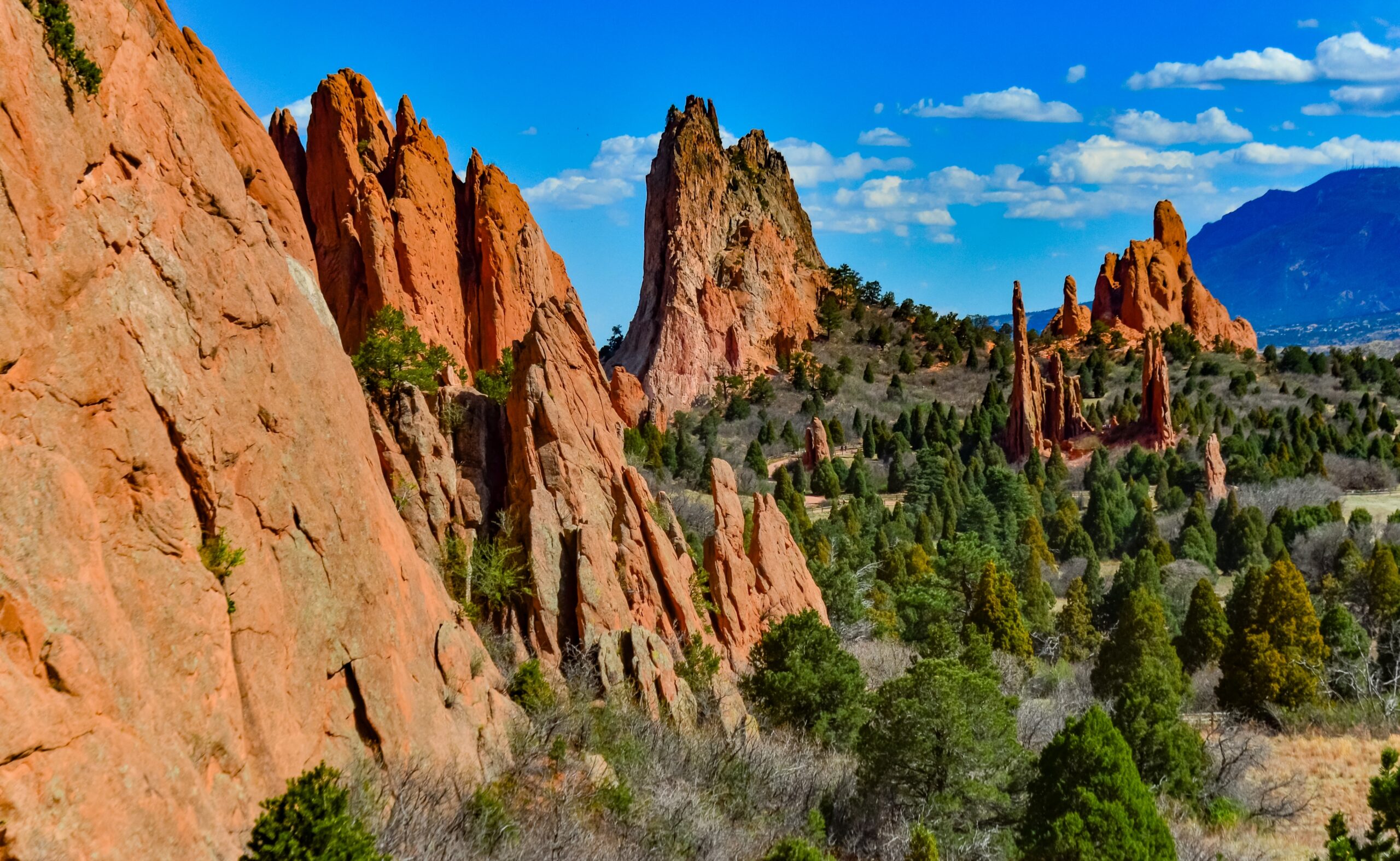
Outdoors: Garden of the Gods Park is the city’s iconic landmark — 1,300 acres of dramatic red rock formations open for hiking, photography, and cycling. Most hiking trails are paved and accessible, making them some of the more wheelchair- and stroller-friendly accessible attractions in the region. Pikes Peak, which inspired “America the Beautiful,” rises to 14,115 feet and offers everything from a scenic toll road to a 13-mile summit hiking trail. Palmer Park is another local favorite — 730 acres of open space and trails right inside city limits, popular with hikers, mountain bikers, and dog walkers alike. For a longer day trip, Manitou Springs offers mineral springs, the historic Manitou Cliff Dwellings, and an old-fashioned charm.
Arts and culture: The Colorado Springs Fine Arts Center at Colorado College combines galleries, performing arts facilities, and an art museum under one roof. The Colorado Springs Museum of Art (CSMOA) is a newer anchor for the visual arts community. The Colorado Springs Philharmonic performs regularly, and the region hosts over 65 galleries. Colorado Springs is officially designated Olympic City USA. The United States Olympic Committee’s Olympic Training Center is headquartered here, and free guided tours let you see where America’s Olympic and Paralympic athletes train.
Sports: The Colorado Springs Switchbacks are a professional soccer team that draws a loyal local crowd. For college sports, the Air Force Academy Falcons compete in football, basketball, hockey, and more. Denver’s pro sports teams — the Broncos, Nuggets, Colorado Rockies, and Avalanche — are about 70 miles north for those who want major league action.
Dining: The local food scene has grown substantially. Standouts include The Rabbit Hole (creative American), Wooglins Deli (a local institution), and a strong local brewery scene anchored by names like Breckenridge Brewery, Bristol Brewing, and Cerberus Brewing.
Pros and Cons of Moving to Colorado Springs
No city guide is complete without an honest look at both sides.
| Pros | Cons |
|---|---|
| Outdoor access is unmatched. Garden of the Gods, Pikes Peak, and hundreds of trail miles are right outside your door. If outdoor recreation is a priority, few cities this size compete. | Car dependency is real. Colorado Springs is not a walkable city outside of downtown, and public transit has meaningful gaps. Budget for vehicle ownership and fuel as a fixed cost. |
| More affordable than Denver. The cost of living in Colorado Springs runs 7.5–11% lower than Denver across most categories, including housing. That gap makes a real difference at the household level. | Home prices have climbed significantly. The median home has increased by roughly 140% since 2012. First-time buyers will face a competitive market, and the entry point is substantially higher than it was even five years ago. |
| Strong employment anchors. A combination of federal military installations and private contractors creates job stability that most mid-sized cities can’t match. The growing tech sector adds upside. | Altitude is an adjustment. At 6,035 feet, the thin air catches many newcomers off guard. Expect to feel winded during workouts, and factor this into your expectations for the first few weeks. |
FAQs
Find Storage in Colorado Springs
Getting settled in a new city takes time, and storage can make the process a lot smoother. Whether you need to stage boxes before moving day, bridge a gap between leases, or offload gear your new place can’t hold, SelfStorage.com is one of the most useful relocation resources available. Many residents book a unit before their moving company even arrives — it takes the pressure off an already hectic day. Compare facilities, filter by size and amenities, and book online.




![The Best States to Retire: Top Destinations for Every Lifestyle and Budget [2026 Update]](https://www.selfstorage.com/blog/wp-content/uploads/2026/01/old-couple-on-a-boat.png)


